
In 2019, I published the political (popular) science book Over sperregrensen (Over the Threshold). In 2020, I published the thriller Risiko. Crux, a sequel to Risiko, was published two years later, and a third book in the series, Mørkefall, came out in 2024.
The main character in the thriller series is Liv Eriksson, a psychologist in her 30s, who grew up in Kjerringøy in northern Norway, but now lives in Oslo. Liv is independent and strong-willed. But she carries both psychological and physical scars – from working as a nurse in emergencies around the world, and most of all from the recent death of her boyfriend Olav.
Risiko was shortlisted for the Nytt blod (Fresh Blood) prize, for best crime debut of the year.
All four books have been purchased by Arts Council Norway, which entails that some 800 copies are bought and distributed to libraries nationwide. On basis of the thriller series, furthermore, I have become a member of Den norske Forfatterforening (The Norwegian Authors’ Union), as well as Rivertonklubben, the crime writers’ guild.
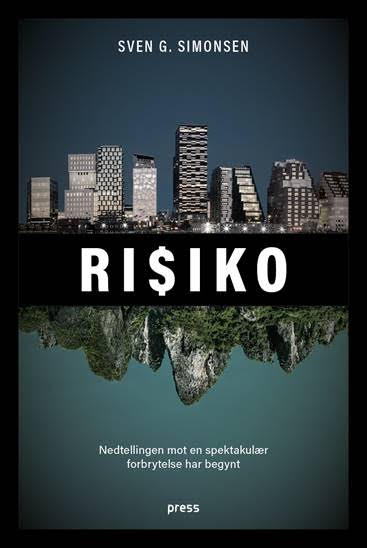

Risiko
LIV ERIKSSON IS A PSYCHOLOGIST and has worked in some of the world’s toughest emergencies. But when her boyfriend Olav falls to his death while they are mountain climbing in Thailand, she breaks down and isolates herself.
Olav was a researcher in Norway’s central police unit for economic crime and an outstanding computer specialist. Someone has posted a clip of his death fall on the internet. Liv realizes that someone out there knows what really happened when Olav died – and sets out to find them. She soon realizes that Olav had secrets that neither she nor his colleagues knew about. She makes discoveries that cause her to question: did she really know Olav?
The turmoil grows into an obsession. Liv’s pursuit of the truth takes her on a journey – to Munich, Cyprus, Beirut – which becomes increasingly dangerous as she approaches the truth about a finance operation of spectacular dimensions.
The countdown has started for what is to become an unprecedented crime.
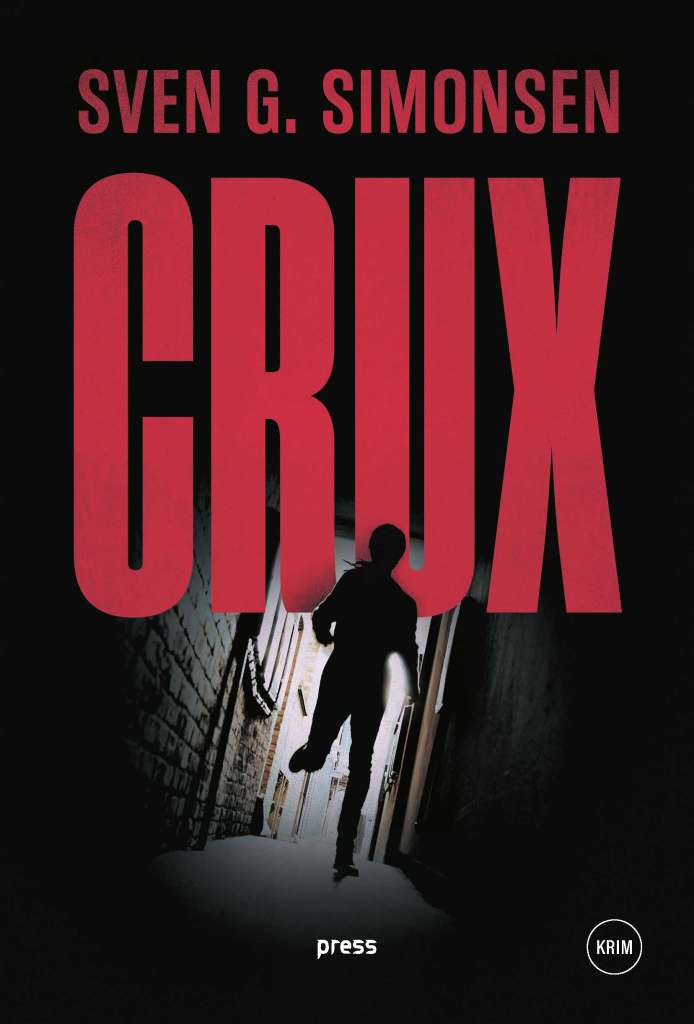
Crux
NATIONALTHEATRET SUBWAY STATION, OSLO: Norway’s newly appointed Minister of Development is seriously injured in what may be a terrorist attack.
A few weeks later, Liv Eriksson is called in for a confidential meeting with the police. She is informed that Dawit, a young friend and a refugee from Eritrea, has become involved with a criminal gang. When the minister was attacked, Dawit was nearby, together with the charismatic gang leader, Yonas.
The attack on the minister remains a mystery for the investigators. Does the solution lie in what the media are calling the “gang lead”? Liv is in a race against time to prove Dawit’s innocence and rescue him from Yonas’ grip. A suspicion leads Liv to travel to Haiti to find answers. Too late, she realizes that in the process, she is reopening old wounds—and must use every resource at her disposal to save herself and others.
Mørkefall
A GROUP OF CONSPIRACY THEORISTS has gathered at a rural chapel in Østre Toten. They are discussing the state of the world, and the mood is friendly—until an unknown man stands up and accuses the others of being cowards and chatterboxes. Action is needed, he declares, purposeful and forceful, he declares, before he abandons the meeting. A young woman who is also attending the meeting becomes curious and follows him. The next day, the woman is found murdered nearby.
The victim is VG journalist Elise Tellefsen, a friend of Liv Eriksson. Elise had been working undercover on a book about Norwegian conspiracy groups. While the police hunt for the killer, Liv teams up with Mikael, a colleague of Elise’s. The two begin their own investigation.

Over sperregrensen
Over sperregrensen. Hvordan verdens valgordninger gjør stemmer til politisk makt (Over the Threshold. How the World’s Electoral Systems Turn Votes Into Political Power) is my first non-fiction book in Norwegian. It is academic by topic, but aimed at a non-specialist audience.
Over sperregrensen is published by Norwegian University Press (Universitetsforlaget). Below is an excerpt from the introductory chapter, laying out the book’s theme and ambition.
How can a candidate be elected president of the United States, while receiving several million fewer votes than his opponent? Why doesn’t Norway have one-party governments any more? Why are there so many parties represented in some countries’ parliaments, and so few in others? And why are women and minorities almost always underrepresented?
These are important questions – they relate to the very workings of democracy. And they cannot be answered without taking into account each country’s electoral system.
In one sense, there are as many electoral systems as there are countries in the world, because no electoral system is identical to another. But it is possible to sort and systematize the different systems that exist into a relatively small number of categories. That makes the picture much tidier, and it becomes easier to see how the systems work, and how they differ from each other. And that is precisely what this book aims to do.
Books about electoral systems easily get too technical to be of interest to non-specialists. The ambition of this book is that it shall be accessible – even entertaining – to a wider audience. Explanations are only as technical as they need to. Much emphasis is placed on examples from around the world: by the time you’ve read to the last page, you’ve touched down in Australia and Afghanistan, USA and Ukraine, Denmark and Djibouti, and many other countries.
At the same time, care has been taken to maintain accuracy. Thus, the book may be useful for example for Bachelor level students of political science and comparative politics, and for election observers who would like to see their field experience in a broader context.
In June 2019, Over sperregrensen was purchased by Arts Council Norway (Kulturrådet), which entails that some 800 copies were bought and distributed to libraries nationwide. Only a small minority of non-fiction books published in Norway are included in this system (innkjøpsordningen for ny norsk sakprosa).
 Sven G. Simonsen